
How to Select Transformers? Differences Between BK / JBK / JMB Series
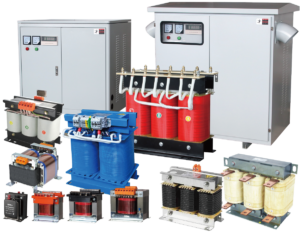
🔥 Essential Guide for Electrical Engineers | BK, JBK, JMB Transformers – How to Choose & Their Differences
Anyone who works on electrical assemblies, equipment retrofits or cabinet wiring knows: Picking the wrong control transformer leads to unstable operation, frequent burnout and higher after-sales costs.
BK, JBK and JMB transformers look similar and serve related purposes, yet they differ greatly in working conditions, performance and reliability. This easy-to-read guide clarifies their differences and selection rules.
🔹 BK Series – General Control Transformer | Cost-effective Standard Model
Positioning: Basic general-purpose, cost-effective, preferred for ordinary working conditions BK is a classic dry-type control transformer, widely used in the market. Simple structure and competitive price, it meets basic power supply requirements for regular equipment.
✅ Application Scenarios
- Control circuits of ordinary control cabinets & distribution boxes
- Power supply for indicator lights, small relays and standard contactors
- General workshop lighting and simple step-down applications
✅ Pros: Low price, abundant stock, highly universal
❌ Cons: Weak anti-interference, poor resistance to frequent start-stop, small overload margin
Selection Tip: Choose BK for simple working conditions without frequent cycling, if cost is your priority.
🔹 JBK Series – Machine Tool Transformer | Upgraded Stable & Durable Version
Positioning: Dedicated for machine tools, strong anti-interference, withstand frequent start-stop, high voltage stability JBK is an upgraded iteration of BK, specially developed for CNC and machine tools. It adopts high-quality iron cores and winding technology complying with industrial standards, ideal for heavy-duty industrial applications.
✅ Application Scenarios
- CNC machines, machining centers, lathes, milling machines and other machine tools
- Control circuits requiring continuous operation & frequent start-stop
- Industrial environments with heavy electromagnetic interference requiring stable voltage
✅ Key Advantages (Major Differences)
- Strong anti-electromagnetic interference
- Independent capacity for each winding, no voltage cross-talk, separated power allocation
- Low temperature rise & low noise, less prone to overheating during long continuous operation
Selection Tip: Pick JBK for machine tools, automated production lines and heavy-duty continuous operation.
🔹 JMB Series – Portable Lighting Transformer | Specialized for Safe Low Voltage
Positioning: Isolation step-down for low-voltage safety lighting, construction-site use
Many people confuse JMB with the above two models. It is NOT a general control transformer. Its core function is stepping down high voltage into safe low voltage for construction sites, confined or damp spaces.
✅ Application Scenarios
- Temporary low-voltage lighting / portable work lights on construction sites
- Power supply for tunnels, underground and damp enclosed spaces
- Isolated safe low voltage (36V / 24V) supply
✅ Features
- Reinforced insulation and good isolation, anti-leakage & anti-shock for maximum safety
- Optimized for lighting loads
❌ Not suitable for high-frequency control circuits or precision equipment
Selection Tip: Choose JMB for construction site low-voltage safe lighting and portable lamp power supply.
💡 Quick Selection Cheat Sheet (Save it!)
1️⃣ Ordinary cabinets, standard control, cost priority → BK Series 2️⃣ CNC machine tools, frequent start-stop, heavy interference, high stability → JBK Series 3️⃣ Site lighting, portable low-voltage lamps, damp environments, safety first → JMB Series
📌 General Capacity Selection Rule (Avoid burnt transformers)
Total load power × 1.3 safety margin. Oversize rather than undersize. For multi-circuit loads, check the independent capacity of each winding to prevent partial overload.
We specialize in industrial electrical products with full range transformers in stock ✨ Customized selection & proper matching to avoid wrong specification and equipment failure.